
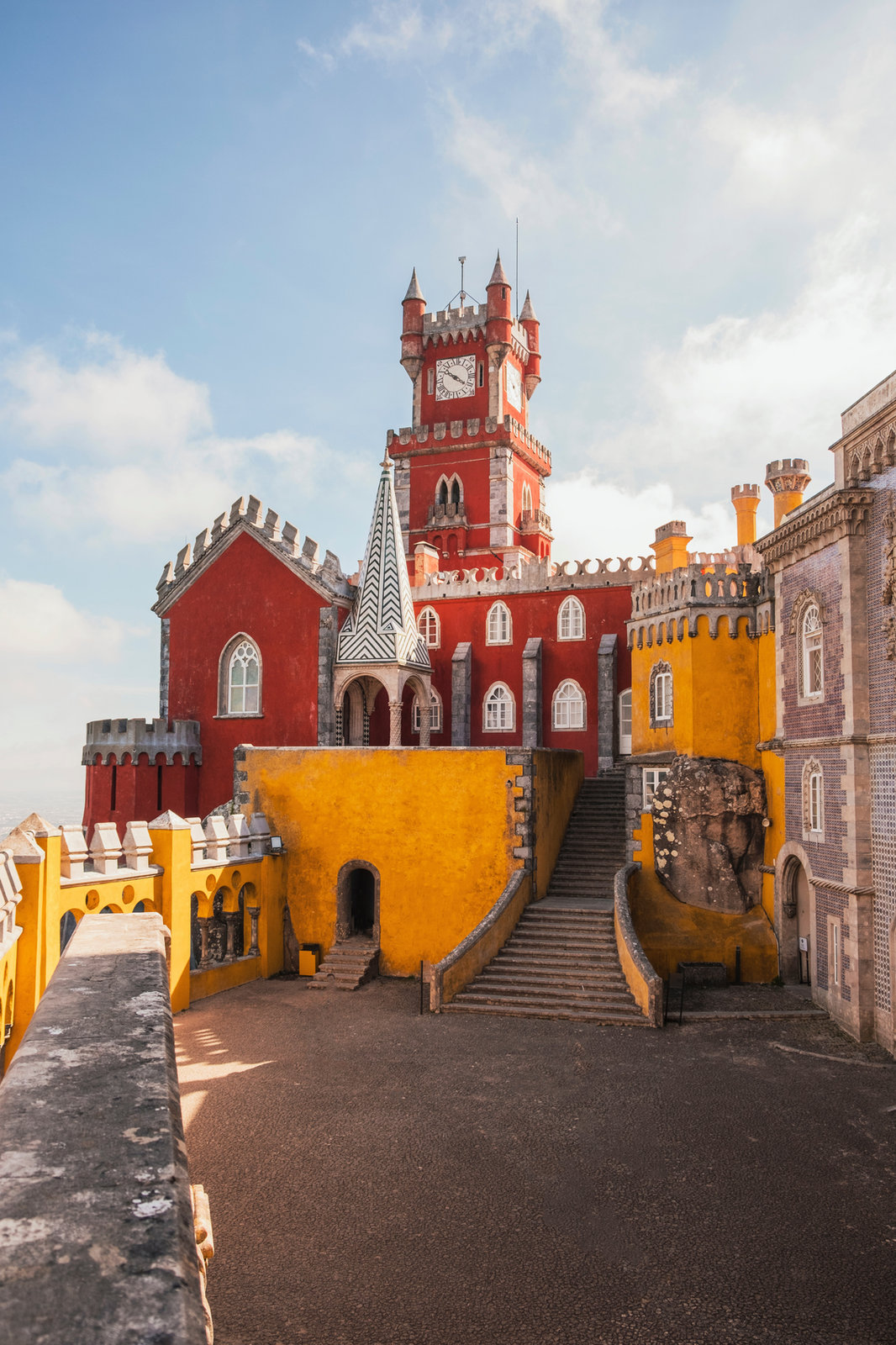
Once upon a time, there was an enchanting town that boasted the most beautiful palaces and the most lavish manors in Portugal… Sintra!
Indeed, this town set on a hill overlooking the ocean is a little gem highly prized by visitors, and for good reason:it combines architectural beauty, the vastness of the surrounding forests, the sumptuousness of the views it offers and the friendliness of its inhabitants.
Sintra was the former holiday retreat of the kings and wealthy nobles who lived in Lisbon and the large surrounding cities. Throughout the year, they came to rest there for a few days or for long periods to escape the bustle of the capital and their daily lives, and to enjoy Sintra’s cool micro-climate.
It’s thanks to this town’s very particular weather conditions that the region’s most beautiful trees and plants can grow.
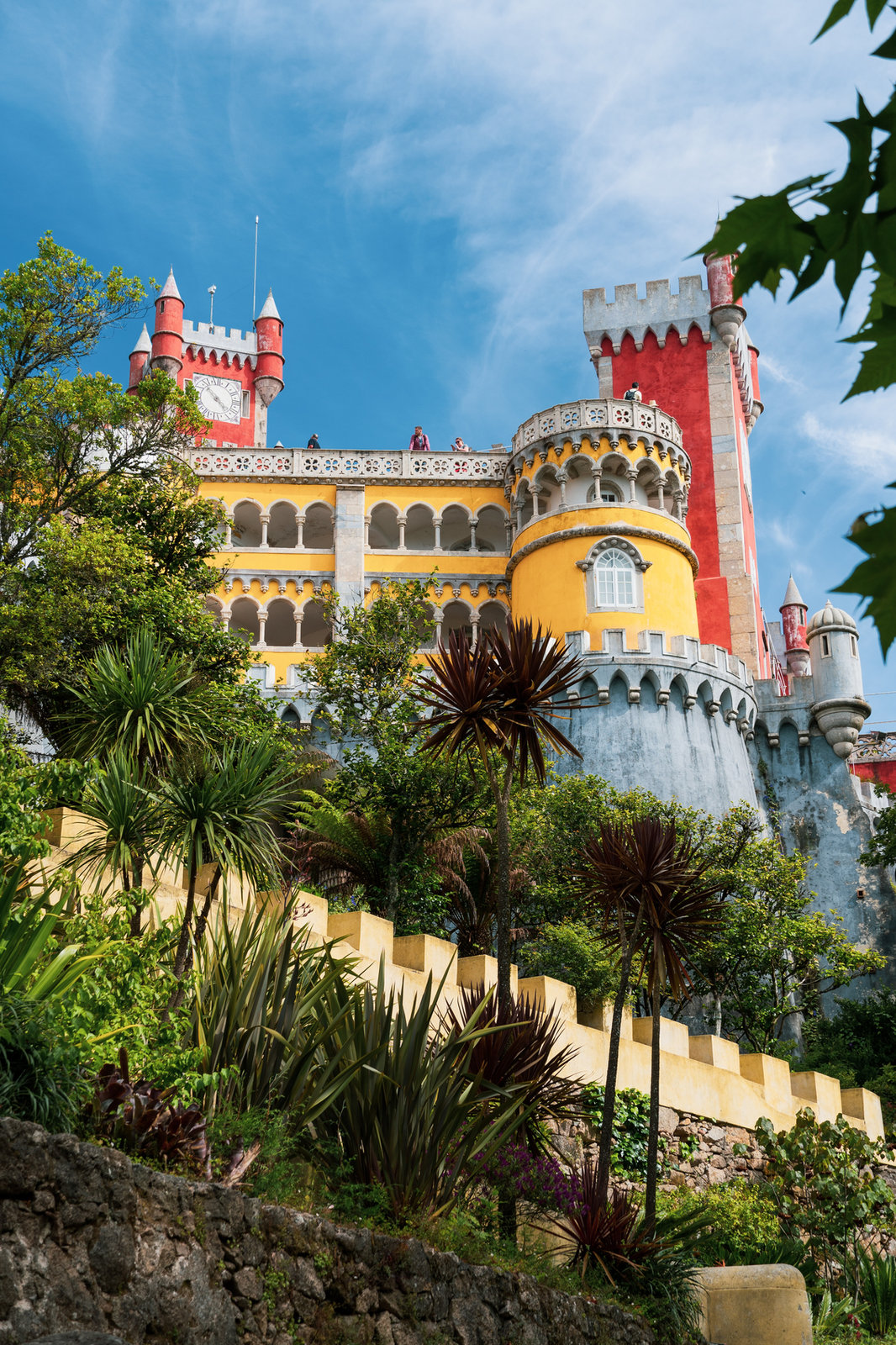
One of Sintra’s gems is the Palácio da Pena and its gardens(also considered one of the 7 Wonders of Portugal since 2007)! In this article, we’ll tell youwhy you should visit this monument and what our tips are for making your visit as successful as possible 🙂 2019 update!
1 – THE HISTORY OF THE PALACE
Originally, the hill on which the current Palace stands was occupied by a chapel dedicated to Our Lady of Pena. Destroyed and then replaced by a convent, which itself suffered irreparable damage in the 1755 earthquake, the area was bought by King Fernando II. The latter,dazzled by the surrounding forest and the extraordinary view offered by the hill stretching as far as the eye can see towards the sea, decided to build his summer residence there. For this he called on a German architect, Baron Von Eschwege, but actively took part in drawing up the architectural plans, setting up the decoration, the symbolic details and the final main Romantic style of the Palace.
The construction of the Palácio da Pena was practically completed in 1847, and displays a mixed style, ranging from Manueline to Moorish, Baroque, Gothic and, of course, Romantic. Only certain decorative and finishing details remained to be put in place. They would be added over the following years.
King Fernando II died in 1855, having been able to enjoy his grandiose project for only a few years. The Palace, bequeathed to his wife, finally became — after a serious public controversy — half public property and waslisted in Portugal’s National Heritage.
In 1910, with the establishment of the Republic, the Palace became a museum open to the public, and kept the same name we know today: the Palácio Nacional da Pena.
2 – VISITING THE PALÁCIO DA PENA – ALL OUR TIPS
The first tip we can’t repeat enough is toarrive at the Palace as early as possible, and therefore to get your tickets online so you don’t waste time.
A little tip from Voyage à Lisbonne: you’ll get a 5% discount by booking through the monument’s official website:https://www.parquesdesintra.pt/area-comercial/bilheteira-2/(it’s in Portuguese but it’s very easy to follow the steps, even without speaking the language at all)
Once inside this wonderful monument,our advice is simple: get lost and take the path that appeals to you most. At first there’s only one visiting direction, but when you reach the Palace’s terraces you can go in several directions, and that’s how you’ll find the most unusual corners, away from the flow of tourists who follow the signs…Our favourites: the Triton gate and the terrace located behind it. An extraordinary view awaits you!
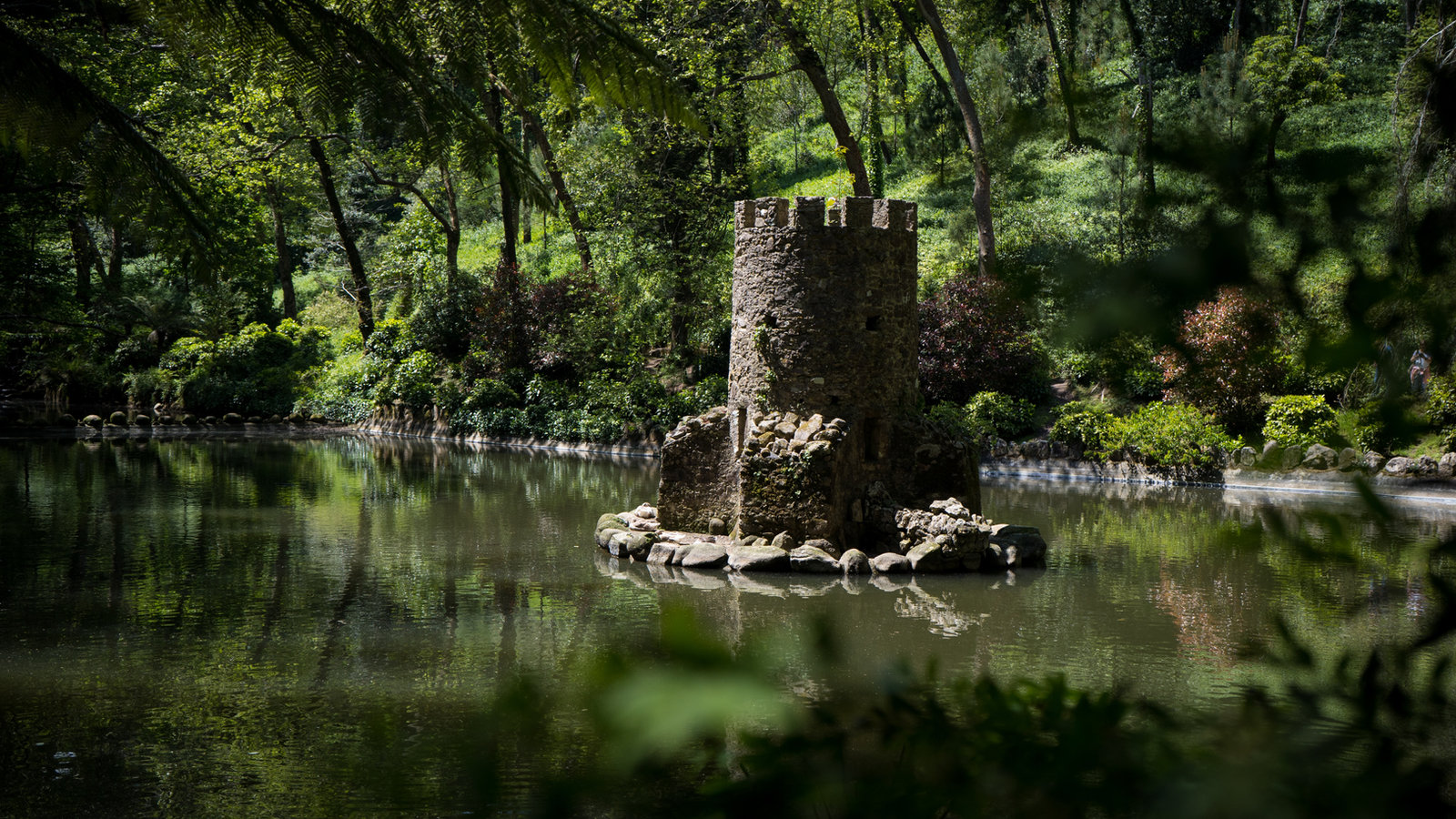
Then,escape into the Palace’s immense gardens, always overlooked by travellers pressed for time, to your great delight!
In our personalized travel programmes, we offer a half-day or full-day self-guided visit of Sintra, adapting to your travel aspirations and giving you the best local tips for visiting the town and its main monuments, notably the Quinta da Regaleira (whose every secret we reveal to you).Don’t hesitate to contact us so we can include this wonderful town in your holiday itinerary with great pleasure:here !